



And I am far from the only one. That is the tragedy. Millions of students feel this right now, today, sitting in classrooms around the world, going through the motions of learning while slowly disconnecting from any sense that it means something.
For years, the educational conversation has centered on achievement: test scores, graduation rates, college readiness, measurable outcomes. The underlying assumption has been that the problem is a performance gap, that students are not attentive enough, engaged enough, disciplined enough, or productive enough.
But what if that is not the real problem?
William Damon, a leading developmental psychologist, has argued that one of the central crises facing young people today is meaninglessness: the absence of a compelling answer to the question, Why does any of this matter to me? When students cannot see the value of what they are learning in relation to their present lives or their future, disengagement is predictable. The human brain is not designed to invest effort in what feels disconnected from meaning and purpose. Academic performance declines and behavioral issues rise are rational responses to a dysfunctional system.
What it Means to Be Successful
Success does not look the same for everyone.
For one person, success means making global impact. For another, it means serving one hundred people in a small town. For another, it means building a beautiful family life, writing novels or playing music, building, leading, inspiring or challenging people and ideas. What makes people feel successful is not one universal outcome. It is alignment between who they are and who they are becoming. It is movement toward a life that feels coherent, chosen, and meaningful.
If success looks different from one human being to the next, then a system built to define, produce, and measure success in one narrow way is fundamentally flawed.
Would it not make sense, then, that the first step in education should be helping students understand who they are?
Step 1: Self-discovery
The first step is helping students understand who they are. Not by asking what they want to be when they grow up, but by helping them explore what they value, where their strengths lie, what they care about, what concerns them, what they aspire to, and what makes them unique.
This is where AI can be especially powerful. We can use now AI to create surveys to explore these areas for each student. It can notice recurring themes in a student’s answers, suggest and expand possible areas of interest. It can help students gather data about themselves, notice patterns and reveal growth areas over time. AI can also facilitate this exploration through dynamic, adaptive conversations. Imagine a system that notices when a student repeatedly gravitates toward questions of fairness across different subjects and contexts. That observes that this particular student lights up when given creative freedom but withdraws when asked to perform in front of peers. That tracks, over months, the emergence of a pattern: an interest in storytelling, a sensitivity to injustice, a curiosity about how communities form and evolve over time.
No teacher with thirty students and limited time can hold that level of detail consistently for every learner. But a well-designed AI system can help surface those patterns and make them useful, both for the student and for the educator.

If success looks different from one human being to the next, then a system built to define, produce, and measure success in one narrow way is fundamentally flawed. Would it not make sense, then, that the first step in education should be helping students understand who they are?

Used responsibly, AI can help educators hold a fuller picture of each student, not just grades or behavior, but interests, motivations, aspirations, and growth areas. That kind of insight can inform lesson design, interventions, mentoring, and support in ways that feel more meaningful and impactful.
Step 2: Defining a Vision
Purpose is not about having your entire life figured out at sixteen.
It is not about choosing a career too early or locking yourself into a fixed identity. It is about developing direction. It is about discovering what pulls you forward, what you care enough about to work for, what kind of life feels worth building, and how you might serve the world through your gifts.
School should be one of the rare times in life when young people are given the space to explore themselves, try things, fail safely, discover new capacities, and imagine different futures.
We talk about resource gaps — funding, technology, qualified teachers. We talk about opportunity gaps — access to advanced courses, extracurriculars, college counseling. These are real and they matter enormously. But underneath all of them is a gap that is harder to measure and perhaps harder to close: the imagination gap.
This matters especially for first-generation students, for students in rural or under-resourced communities, and for students whose families have not had access to a wide range of professions, pathways, and networks.
I remember my brother coming home one day after meeting with a school counselor. He had been advised to leave school after middle school and pursue vocational training in construction because, as the counselor saw it, that was the path for most Portuguese immigrant families. My mother was furious. She scheduled a meeting immediately. I do not know exactly what she said, but I know this: when it was my turn to meet that same counselor two years later, she refrained from giving me any advice at all.
AI can do something profoundly different here. Not by prescribing what a student should want, but by systematically expanding what they know is possible to want. It can expose students to paths, professions, projects, and communities they may never otherwise encounter. It can also help teachers and counselors see potential and exploration avenues they might have missed.
The Myth of Personalized Learning
For years, education has promised personalization.
The word is everywhere. But what have we actually personalized? We have made content more accessible. We have adjusted pace. We have differentiated tasks. We have used data to recommend what comes next. But most of the time, we are still delivering the same system in slightly more flexible ways. The center has not moved. The curriculum remains fixed. The student is simply given a more comfortable seat within it. That is not true individualization. Real individualization begins with the learner.
What I am arguing for is not just student-centered learning, but student-defined learning: learning experiences co-created by educators and students, grounded in who students are, what they care about, and who they are becoming. This is not entitlement. It is not self-centeredness. It is not isolation. It is not handing every student a tablet and leaving them alone in front of a screen. It is helping educators connect what they teach to what students need to learn. It is connecting the reason a teacher chose to teach with the reason a student chooses to engage. It is building the bridge between the curriculum and the learner’s life. Students need to know: Why does this matter? Why does it matter to me? Why does it matter now? That is where engagement lives.
Purpose-driven learning is not about making learning easy. Learning does not happen in comfort. It happens in stretching, in effort, in challenge. But challenge without meaning becomes compliance. Challenge with meaning becomes progress, growth and fulfilment.
But how do we do this when one teacher has thirty-two students and fifty minutes?
For most of the last century, purpose-driven and individualized learning was simply not scalable. A remarkable teacher in a well-resourced environment might, over time, come to know a handful of students deeply. Most teachers do not have that luxury. They are carrying too much, with too little time, inside structures that were never designed for this level of human attention.
This is precisely where AI, used responsibly and with clear educational purpose, can help solve a structural problem. AI can help us see students more fully than the current system allows. Right now, the students we notice most are often those furthest from the norm: those who are excelling dramatically, those who are struggling academically, or those whose behavior demands immediate attention. Everyone else can disappear into the middle. AI can help make the invisible visible. It can help see, understand and support students and design learning accordingly in a matter of minutes.
Step 3: Closing the Gap by Building the Right Skills
Purpose comes first. Skills come second.
That does not mean skills do not matter. But when someone has a strong why, they become resourceful. They learn what they need to learn. They seek support. They find collaborators. They persist. Purpose is often the catalyst for capability. When students know where they want to go, learning skills becomes a logical pathway rather than the destination.
A student who wants to become an entrepreneur needs more than business knowledge. She needs to communicate a vision clearly. She needs to collaborate, persuade, tolerate uncertainty, think in systems, learn quickly, recover from setbacks, and adapt under pressure. She needs financial literacy, cultural awareness, creativity, resilience, courage, and judgment. This, too, is where AI can help. It can help students map the gap between where they are and where they want to go. It can connect what they are learning in school to the capabilities their direction actually requires. It can help make explicit what is often invisible: This is why this matters. This is what this skill is building. This is how this challenge serves the impact you are trying to create.
Step 4: Support, Mentorship, and Real-world Opportunity
Students do not just need better content. They need support.
For many young people, especially those without built-in family networks, mentorship can be one of the most transformative forces in their lives. Research on mentorship is remarkably consistent: young people with meaningful mentors are more likely to stay in school, pursue further education, develop confidence, and report a stronger sense of purpose.
And yet, for most students in most schools, mentorship remains largely unavailable.
This is another area where AI can play a powerful supporting role, not as a replacement for human connection, but as infrastructure for it.
Imagine a system that, based on what it has learned about a student over time, can identify professionals in relevant fields who are open to mentoring. Imagine it surfacing why the match makes sense, helping facilitate introductions, suggesting relevant opportunities, and helping students see what courses, languages, experiences, universities, grants, or pathways may be connected to the future they want.
No counselor can know all of that for every student. AI can help expand that support.
And beyond mentorship, imagine the broader ecosystem it could help students access: peers across cities and countries who care about the same problems, competitions aligned with their interests, fellowships, community projects, organizations looking for contributors, learning communities built around the exact questions a student cannot stop asking.
Education should not run parallel to life. Students should not have to leave school in order to begin building the life that matters to them. School should be one of the places where that life begins to take shape. Its role should be to help each student find the tools, the training, the opportunities, and the support to move toward their own version of success, whatever success means for them.
One of such tools is CheckIT LMS, a neuroscience-based ecosystem I have envisioned as a step toward education that aligns with how students learn best.
Author Bio:
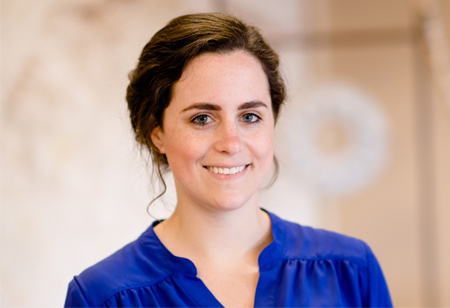
Myriam Da Silva is the CEO and visionary behind CheckIT Learning, home to the pioneering neuroscience-trained AI mentor Cleo. With over 15 years of experience in language education and educational leadership, she brings a globally informed, evidence-based perspective to the future of learning.
A serial learner, Myriam has cultivated a multidisciplinary foundation spanning business strategy, language didactics, mind-brain education (MBE), and holistic health. She authored The Black Sheep (2026), a book championing the principle that difference is a driver of contribution.
Myriam was named one of the top 100 influencers in the State of EdTech Report by EdTech Digest.